
ALGO LAKIERNIA body repair · Warsaw

Workshop

How we work

A paint repair is six stages in a fixed order. Skip any one of them and you will see it in the paint later — so we do them all.

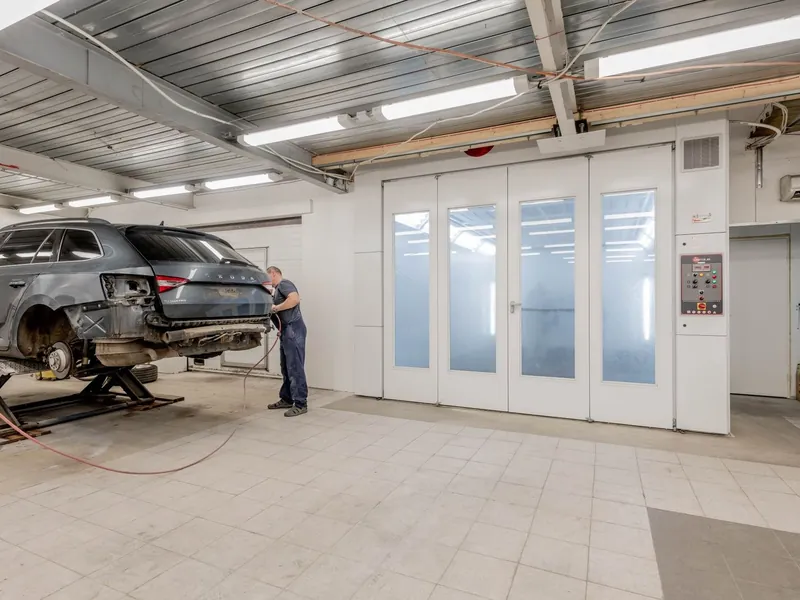
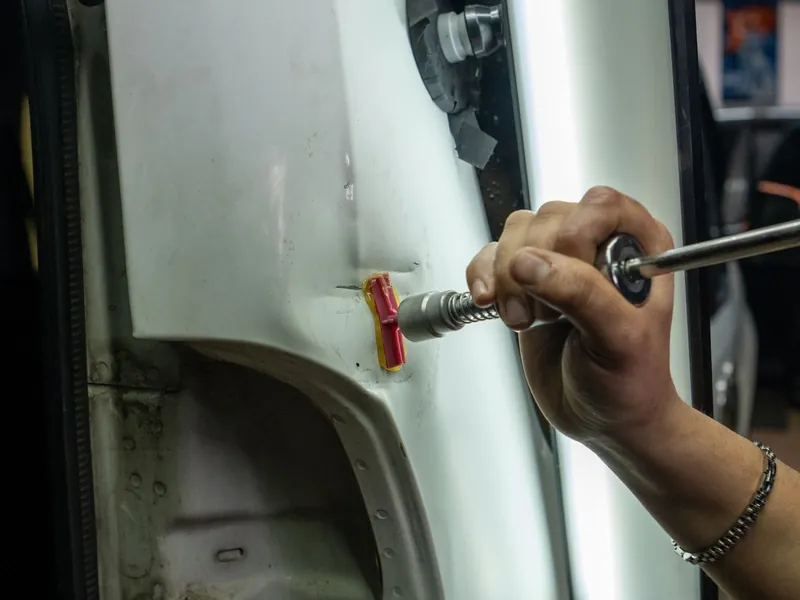
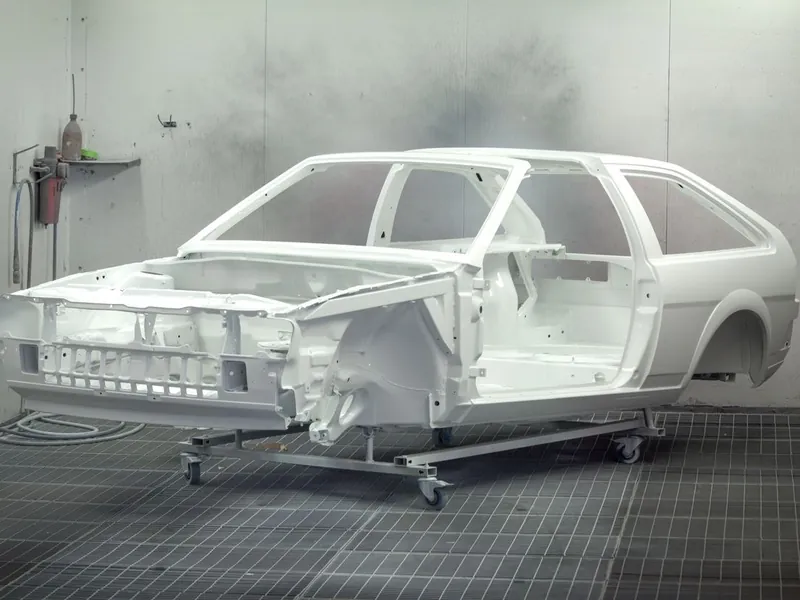
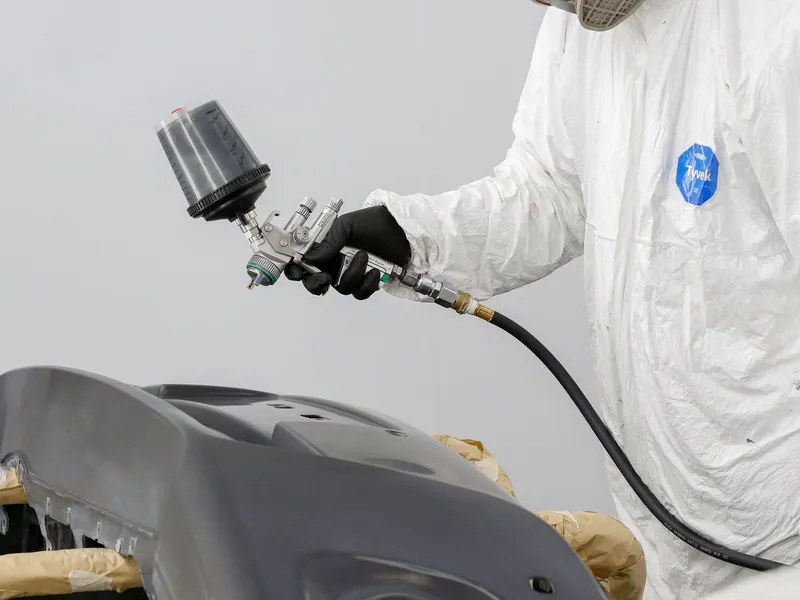
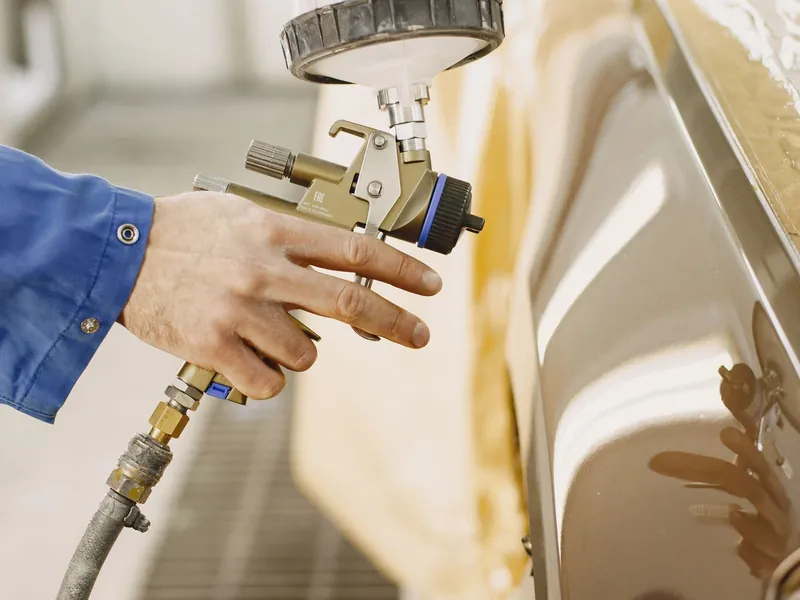
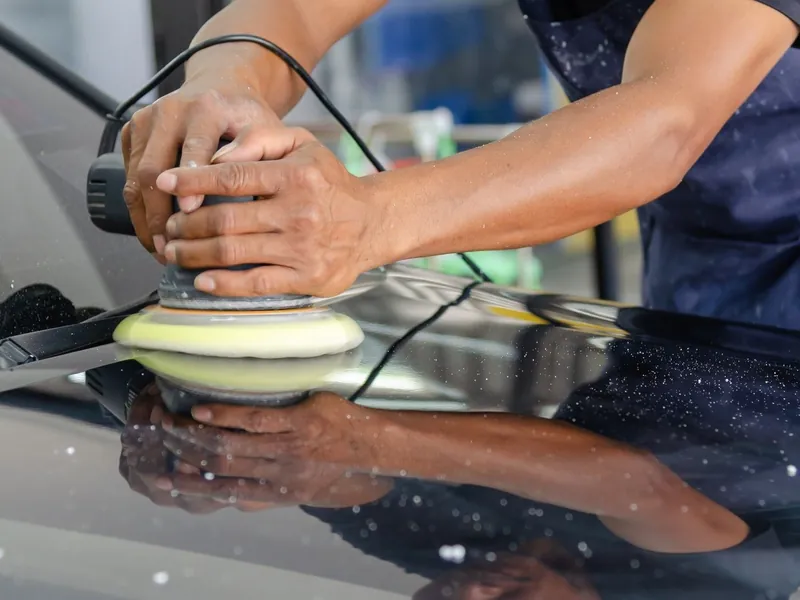
Illustrative photos showing the stages of the work — they are not pictures of our workshop or of jobs we have done. Our own photos will appear once the first cars leave the shop.

  1. Stripping down — We remove the parts that hide the damage. Only then is the full extent visible.
    01 Stripping down We remove the parts that hide the damage. Only then is the full extent visible.
  2. Bodywork — Straightening and panel replacement. Geometry first, paint later.
    02 Bodywork Straightening and panel replacement. Geometry first, paint later.
  3. Primer — Filling, sanding and primer. This stage decides how the paint will sit.
    03 Primer Filling, sanding and primer. This stage decides how the paint will sit.
  4. Base coat — The colour, matched to your specific car, goes on in layers inside the booth.
    04 Base coat The colour, matched to your specific car, goes on in layers inside the booth.
  5. Clear coat — The layer that gives the gloss and protects the colour from sun and stones.
    05 Clear coat The layer that gives the gloss and protects the colour from sun and stones.
  6. Polishing — The final step: evening out the gloss and checking the surface under light.
    06 Polishing The final step: evening out the gloss and checking the surface under light.

01 Stripping down

We take off the bumper, lights, handles, trims and seals — everything covering the damaged panel. A part that has been unbolted can be repaired and painted across its whole surface, edges and folded returns included. Stripping down also shows what sits underneath: cracked mountings, a patch of corrosion, a dent that runs further than it looked from outside.

When masking tape goes on instead, the paint ends in a hard line somewhere arbitrary. After a few car washes and one winter it starts lifting from that edge, and the old colour shows from under the seal. That kind of repair looks fine at handover and gives itself away a year later — just when you want to sell the car.

Does the bumper have to be removed to respray it?

Usually yes. A bumper painted on the car has unpainted edges and contact faces, and the neighbouring panels are left with a tape line. Off the car it can be washed from behind, cracks repaired and the whole thing painted, including the folded returns you never see from outside.

Will the clips and fasteners break when the car is stripped down?

Some clips are single-use and snap on removal — they are designed that way. That is why they are replaced with new ones rather than pushed back in. You notice it later: the bumper doesn’t rattle over bumps and holds an even gap along the wing.

How much has to come off to paint one door?

Normally the handle, trims, seals and mirror, sometimes the door card. The exact list depends on the model and where the damage sits. We take off enough that the paint doesn’t stop halfway across a panel, but we don’t strip the car for the sake of it — every part removed is another set of fixings.

02 Bodywork

We pull, straighten and — where the metal is torn or badly creased — replace the panel with a new one. With heavier damage the body has to be brought back to factory dimensions — until the geometry is right, there is no point going any further. At the end we check the gaps, and that the doors, bonnet and boot lid close under their own weight without being pressed. Paint only goes on metal that is the right shape.

Filling a bent panel instead of straightening it shows up in every low sun: the surface ripples and reflections break across it. Geometry left out of true gives uneven gaps, doors that catch, damp in the boot and tyres that wear early. Those are faults no paint job, however well applied, will ever put right.

Can a dent be repaired without painting?

Yes, if the paint isn’t broken or cracked — car park dents and hail damage are pushed out with PDR (paintless dent removal), from behind, with no filler and no paint. Once the metal is scratched through to the primer or creased on an edge, PDR isn’t enough and the panel has to be painted.

Is it better to repair or replace a damaged panel?

It depends on what the impact did to the metal. A dent in a flat area is usually worth straightening. Torn metal, creases across swage lines and panels that carry body strength are replaced — repaired ones go back to the old shape, but they don’t behave predictably in the next impact.

Can you tell a car has been repaired after bodywork?

By eye, on a job done properly, no. A paint thickness gauge will still show the panel has been painted, and there is nothing suspicious in that. What matters is whether the gaps are even and the metal straightened, rather than buried under a thick layer of filler.

03 Primer

We level the surface: fill the low spots, sand with progressively finer paper and check the plane under raking light and with a flat hand, because your hand finds a wave the eye still misses. Then the primer goes on — the coat that seals the sanding marks, gives the paint something to grip and cuts it off from whatever lies beneath.

It is the most thankless stage: invisible on the finished car, and it decides everything. Sanding skipped comes back a few weeks later as the outline of the filler, showing through the paint like a shadow. Without primer the paint has nothing to hold on to and lifts in sheets at the first stone, leaving bare metal.

Does a car need filler before painting?

Not always. If the metal has been straightened accurately, primer is enough. Filler levels what can no longer be pulled out of the panel — in a thin layer, over solid ground. Thick filler over metal that was never straightened cracks in time and comes away along with the paint.

Why is my new paint flaking off in patches?

Usually because it went onto badly prepared ground: no degreasing, not enough keying, or no primer. Paint holds on mechanically and needs a clean, slightly rough surface. On a smooth or greasy one it only appears to stick, and lifts in one piece at the first stone chip.

Does the primer have to match the colour of the paint?

With many colours, yes. Thin base coats — reds, yellows and whites especially — let what is underneath show through. A primer tinted towards the car’s colour gets you the right shade in fewer coats, and less paint on the panel means a longer-lasting finish.

04 Base coat

The paint code on the VIN plate is only a starting point: the same code is often produced in several variants, and every paint fades in the sun over the years. So we match the colour, spray it onto a test card and compare it with the car under the booth lights. The base goes on in thin coats — on its own it is matt.

‘Near enough’ doesn’t exist with colour: you see it exactly where two panels meet, in full sun, from several metres away. Metallics and pearls add a second problem — flake that lands unevenly gives streaks and cloudiness that look different from every angle. No amount of polishing will fix that.

Can you match car paint exactly?

With proper colour matching and blending, the difference isn’t visible. It isn’t a matter of copying the code off the plate, though: the paint on your car has changed over the years, so we match the colour to that particular car rather than to a factory recipe from several seasons ago.

Why paint the next panel when only one is damaged?

That is blending: the new colour is carried onto the adjacent panel and faded out across it, instead of stopping at the gap. The eye catches a difference in shade precisely at the edge between two panels; spread across a surface it disappears. With metallics it is practically a condition of a good repair.

Why is metallic paint harder to spray?

Because the way the colour looks depends not only on pigment but on how the flake lies in the coat. Gun distance, pressure and temperature all change that. On a solid colour an inaccuracy gives at most a slight shift in shade; on a metallic it gives visible streaks that jump out in the light.

05 Clear coat

Clear coat goes over the fresh base: it is what gives the gloss, the depth of colour and the durability. It cures in the booth at a raised temperature and in filtered air: the heat is there so the lacquer cures all the way through, and the filtered air so that a speck of dust settling at this moment does not stay in the finish for good.

This is the stage where mistakes show most, because the surface shines. Too much material at once means runs and waves along the edges; too little means a dull finish that can’t be polished up, as there is nothing left to level. Dirt out of the air sits sealed under the surface and only appears in sunlight.

What is clear coat for if the colour is already on?

Because the base is matt and defenceless on its own — it is a thin layer of pigment. All of the gloss, and the resistance to UV, car washes, road salt and small stones, comes from the clear coat. Without it the colour would go dull and start wearing through within a season.

When can I wash my car after a respray?

The surface is dry to the touch straight away, but the coating goes on hardening for several weeks. During that time wash by hand, keep hot pressure water out of the edges, and skip waxes and protective coatings. Remove bird droppings and tree sap at once — fresh paint is more sensitive to them.

06 Polishing

Last, we level the surface: by machine, with compounds of decreasing cut, under a spot lamp that pulls out every imperfection. We take out the specks that settled in the paint despite everything, and bring the gloss of the new panel down to the level of the rest of the car, so the repaired area doesn’t stand out from its neighbours.

Without this stage fresh paint can read brighter than the rest of the car: it shines differently, and that is exactly how a repair gets spotted. Polishing has another side, though — each pass removes a microscopic layer of clear coat. Too aggressive, especially on swage lines and edges, it burns through and leaves holograms: swirl marks visible in the sun.

Does polishing remove scratches?

Shallow ones, yes. The rule is simple: if the scratch doesn’t catch your fingernail, it sits in the clear coat and can be polished out. If your nail catches, it has reached the colour or the metal, and polishing will only soften the edges — that panel needs painting.

Does polishing wear the paint away?

Yes — every polish takes a few microns off the clear coat, which is why it isn’t done without reason and isn’t repeated every month. A factory coat allows for it a handful of times in a car’s life. Edges and swage lines wear through first, where there is least paint.

Send photos of the damage

Attach a few photos and tell us what happened. We’ll get back to you with an estimate and a repair plan.

Photo estimate
Call WhatsApp Estimate